

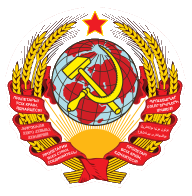
Kyiv was part of the USSR and was one of the largest populated areas of the Soviet Union. The city was the administrative, cultural and economic center of the Ukrainian SSR. During the years of the USSR, Kyiv went through numerous political, economic, social and cultural changes.
In 1920, after the Revolution of 1917, Kyiv became the capital of the Ukrainian SSR. During the years of the USSR, the city underwent major changes. In 1934, Kyiv was united with its regional center, the city of Kharkov, and as a result of these events, large-scale industrialization took place in Kyiv. A multi-page program was implemented, according to which factories were built in Kyiv to produce cars, tractors, tires, machines, televisions, radio equipment and much more. There were more than 300 industrial enterprises on the territory of Kyiv.
Kyiv was an important scientific and cultural center. The city was home to the Academy of Sciences of the Ukrainian SSR, many scientific institutes and universities. Kyiv was also famous for its famous theaters, film studio and many museums, including the Museum of the History of Kyiv, the Museum of Literature of Ukraine, and the Museum of Ukrainian Painting.
One of the most significant events in the history of Kyiv was the Chernobyl disaster in 1986. This nuclear incident occurred at the Chernobyl Nuclear Power Plant, located 100 km from Kyiv. As a result of the accident, a significant part of the population in the surrounding areas was evacuated, and this tragedy still has great significance for the city.
With the collapse of the USSR in 1991, Kyiv became the capital of independent Ukraine. Since then, the city has continued to develop, becoming more modern and attractive to tourists and investors.